
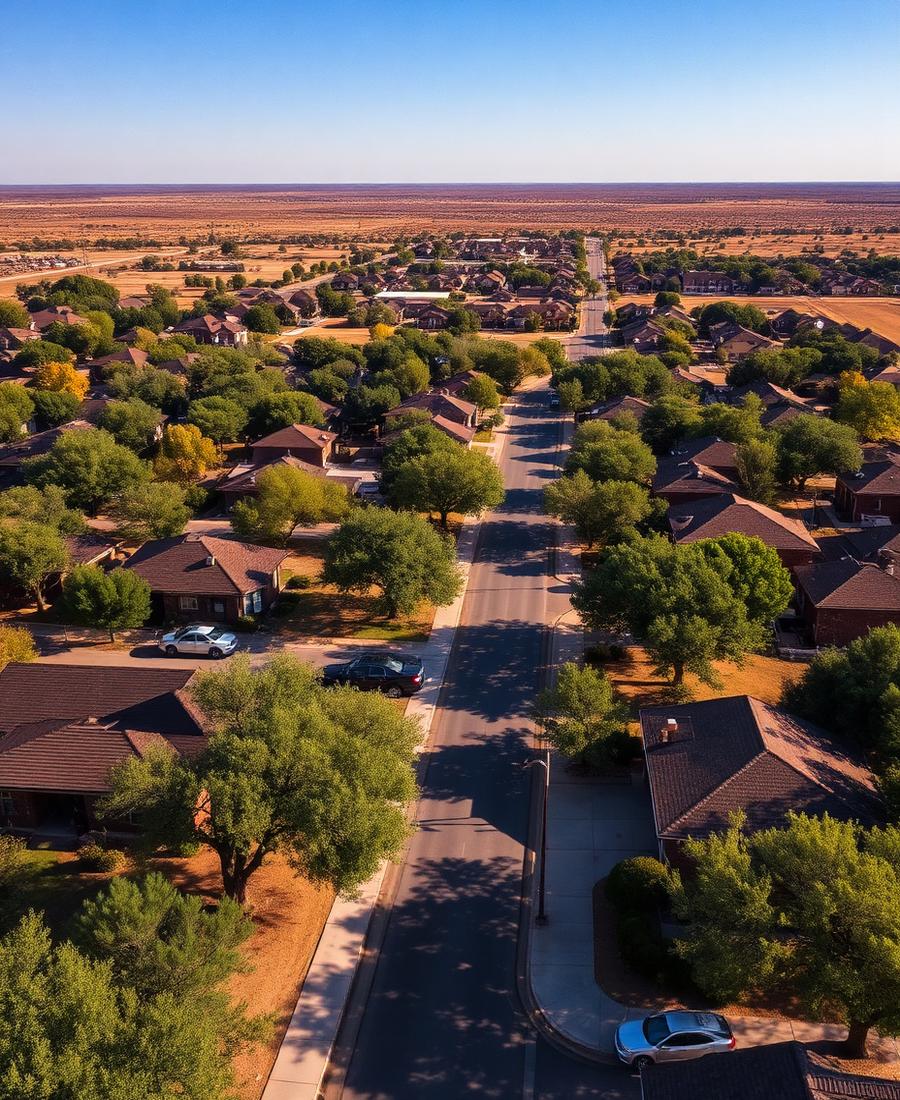
Abilene, Texas
Abilene Real Estate
Abilene real estate covers everything from established in-town neighborhoods to new construction on the edges of the city.
The center of the West Texas market
Abilene is the economic and cultural center of the Big Country, offering buyers something that is becoming harder to find in many growing Texas markets: a wide range of homes, room to spread out, and access to the conveniences of a regional city without the scale and congestion of a major metro area.
With an estimated population of more than 131,000, Abilene is the primary population and employment center for a large portion of West Central Texas. The city has long been supported by healthcare, education, Dyess Air Force Base, retail, and regional business. More recently, billions of dollars of technology and data-center investment have introduced another potential source of long-term economic growth.
The Abilene real estate market includes everything from historic homes near the center of town and established mid-century neighborhoods to newer subdivisions, larger homes, investment properties, and acreage near the edges of the city. That variety makes Abilene worth considering whether you are buying your first home, looking for more space, relocating to West Texas, or searching for a long-term real estate investment.
What Types of Homes Can You Find in Abilene?
One of Abilene's biggest advantages is the variety of property available within a relatively compact market.
South and southwest Abilene contain many newer subdivisions and larger homes, while established areas such as River Oaks, Brookhollow, Elmwood, and the Sayles Boulevard area provide opportunities to find older homes, mature neighborhoods, distinctive architecture, and properties that may offer renovation potential.
Buyers can find modest single-family homes on traditional city lots, larger homes in established neighborhoods, newer construction with modern layouts, rental properties, and homes with considerably more land.
Those looking for additional space can also explore the outskirts of Abilene. As you move beyond the more developed portions of the city, larger lots and acreage properties become more common, giving buyers the opportunity to combine access to Abilene with a more open West Texas setting.
Because housing styles, lot sizes, and prices vary considerably across the city, buyers can compare several different types of properties without leaving the Abilene market.
Which Part of Abilene Should You Buy In?
The right part of Abilene depends heavily on what you want from the property.
South and southwest Abilene are worth exploring if newer construction, newer subdivisions, larger homes, or access to growing retail and commercial areas are priorities.
River Oaks and Brookhollow provide established residential areas with traditional homes, mature landscaping, larger properties, and convenient access to central and southwest Abilene.
Central Abilene and the Sayles Boulevard area can appeal to buyers who appreciate older architecture and established neighborhoods. These areas also provide access to downtown, universities, healthcare facilities, restaurants, and other parts of the city.
North and northeast Abilene may appeal to buyers looking for convenient access to Abilene Christian University, Interstate 20, major employers, and commercial development on the northern side of the city.
Buyers looking for more land may also want to explore properties toward the southern, eastern, and western edges of Abilene, where development becomes less dense and larger lots and acreage become more common.
There is no single best part of Abilene. The better question is which area gives you the right combination of home style, lot size, price, commute, nearby amenities, and long-term plans.
Schools and Education in Abilene
Education is another consideration for buyers comparing different parts of the Abilene real estate market.
Much of the city is served by Abilene Independent School District. AISD reported enrollment of 14,533 students for the 2025–26 school year and operates three high schools, four middle schools, and 11 elementary schools, along with specialized academic, career, technical, fine-arts, and other educational programs.
Buyers looking at properties in portions of south Abilene and the surrounding growth areas may also encounter homes within Wylie Independent School District. Wylie ISD continues to expand its campuses and attendance zones as residential development occurs on the southern side of the Abilene area.
Because school attendance boundaries can change and can vary from one property to another, buyers should verify the current district and assigned campuses for any specific home they are considering.
Abilene is also an important higher-education center for the region. The city is home to Abilene Christian University, Hardin-Simmons University, and McMurry University, as well as Texas State Technical College and other higher-education and professional-training opportunities.
The presence of multiple universities brings students, faculty, employees, sporting events, cultural activities, and visitors into the city while also contributing to employment and rental-housing demand in surrounding areas.
For buyers, schools are one factor to consider alongside home price, property size, commute, location, amenities, and long-term goals when deciding where in Abilene to purchase.
Why Buy or Invest in Abilene?
Abilene has several economic anchors that distinguish it from a smaller rural market. The city serves as a regional center for healthcare, education, military activity, retail, business, and professional services.
Dyess Air Force Base has long been an important part of the local economy, while the city's universities, healthcare providers, and regional employers provide additional sources of employment and housing demand.
More recently, Abilene has attracted a level of technology infrastructure investment that is unusual for a city of its size.
The Lancium Clean Campus and Stargate development have established Abilene as an important location for large-scale artificial-intelligence infrastructure. Plans allow for as many as eight data-center buildings on the campus, with the potential for hundreds of permanent technology jobs in addition to the much larger construction workforce required to build the facilities.
Additional investment is occurring outside the city as well. Vantage Data Centers' Frontier project near Abilene is planned as a roughly 1,200-acre campus with 10 data centers and more than $25 billion of investment.
For investors, this does not mean every property in Abilene will appreciate or that every rental will produce strong returns. It does, however, introduce a major new source of economic activity into a market that was already supported by military, healthcare, education, and regional employment.
How Data Center Growth Is Affecting Abilene Housing
The effect of the new data-center projects is already showing up in Abilene's housing market.
Large construction projects require thousands of workers, and the rapid arrival of those workers has placed additional pressure on an already limited supply of housing, rentals, hotels, and temporary accommodations. Reporting from early 2026 documented significant shortages of available housing as workers arrived for the Stargate development.
Housing-market data also show a noticeable increase in activity. During the three months ending June 2026, Redfin reported Abilene home prices nearly 20% higher than the same period a year earlier, while homes were selling considerably faster and the number of sales had increased. Zillow's broader home-value index also showed significant year-over-year appreciation.
Rental demand has been particularly strong. Zillow's rental-market data showed asking rents in Abilene substantially higher in August 2026 than one year earlier.
These numbers should be viewed with some caution. Real estate statistics can move significantly based on the mix of properties sold or listed in a particular period, and construction workers create a different type of housing demand than permanent residents.
Still, the combination of rising prices, faster sales, higher rents, and documented housing shortages provides strong evidence that Abilene is experiencing a genuine increase in housing demand.
Is Abilene Growing as Fast as North Dallas?
Not yet.
Abilene's recent housing-market strength should not be confused with the type of population growth that communities north of Dallas have experienced for many years.
From the 2020 Census estimate base through July 2025, Abilene's population increased approximately 5.3%. Over the same period, Frisco grew approximately 18.2%, while Collin County grew 21.7% and Denton County grew 18.0%.
The difference is important for real estate investors.
North Dallas growth has been driven by decades of large-scale suburban expansion, corporate relocations, employment growth, highway infrastructure, master-planned communities, and migration into the Dallas-Fort Worth metropolitan area.
Abilene is experiencing something different: a smaller market is receiving an unusually large amount of new investment in a relatively short period of time. Because the existing housing supply and population base are much smaller, even several thousand additional workers can have an outsized effect on rents, home availability, and prices.
That can create opportunity, but it also means buyers should distinguish between temporary construction demand and permanent long-term population growth when evaluating an investment.
What Is the Future of the Abilene Real Estate Market?
Abilene may be entering one of the more significant periods of economic change the city has experienced in decades.
The strongest argument for the market is not that Abilene will become another Frisco. Instead, it is that Abilene already serves as the primary city for a large surrounding region, and significant new investment is being layered on top of an economy supported by Dyess Air Force Base, healthcare, universities, retail, and other established employers.
Data-center development could strengthen that position.
The projects themselves will create permanent jobs, but the broader opportunity may be larger than the number of people working inside the data centers. Major investment can generate demand for construction, electrical work, engineering, maintenance, housing, restaurants, retail, professional services, infrastructure, and businesses that support the facilities and their employees. The Lancium project alone is projected by Abilene's economic-development organization to generate substantial ongoing economic output and tax revenue if all planned buildings are completed.
At the same time, buyers should avoid assuming that today's rapid rent and home-price increases will continue indefinitely. A large portion of today's demand is tied to construction workers, and some of that temporary demand could decline as individual projects reach completion.
The more important long-term question is whether the current investment attracts additional employers, permanent workers, supporting businesses, infrastructure, and residents to the Abilene area.
If that occurs, Abilene could move from a historically steady regional housing market into a market with a meaningfully higher long-term growth rate.
For buyers and investors, that makes Abilene a market worth watching closely—but one where the individual property, location, purchase price, and investment strategy still matter.
Life in Abilene
Abilene offers considerably more to do than many smaller communities in the surrounding region.
Downtown Abilene includes restaurants, coffee shops, local businesses, historic buildings, museums, entertainment venues, and community events. The city is also known as the Storybook Capital of America, with attractions and sculptures inspired by children's literature throughout the downtown area.
Local attractions include the Abilene Zoo, Frontier Texas!, The Grace Museum, and the Paramount Theatre, along with numerous parks and recreational facilities. Abilene's universities also provide college athletics, performances, lectures, and other events throughout the year.
For outdoor recreation, the Abilene area provides access to parks, trails, lakes, hunting, and the open spaces that characterize much of West Texas.
Restaurants, shopping, healthcare, entertainment, and everyday services are readily available throughout the city, allowing residents to enjoy many of the conveniences of a regional center without living in a major metropolitan area.
Is Abilene Right for You?
One of the strengths of the Abilene real estate market is that buyers do not have to choose just one type of property or lifestyle.
You can purchase an older home with character near the center of the city, live in an established residential neighborhood, choose a newer home in a growing subdivision, buy an investment property near a university or major employer, or move toward the edge of town for additional land and space.
For investors, Abilene is becoming particularly interesting because its traditional sources of housing demand are now being supplemented by a major wave of technology and infrastructure investment.
That does not make every property a good investment, but it does make understanding individual neighborhoods, new development, employment centers, rental demand, and future growth increasingly important.
Red Rock Realty Group works with buyers, sellers, and investors throughout Abilene and the surrounding Big Country. Whether you are looking for an established home, new construction, an investment property, or more land and space, we can help you compare the different parts of the Abilene market and find the property that fits what you are trying to accomplish.
Call (325) 669-5151 or send an inquiry to start your Abilene property search.
RedRock Realty Group works with buyers, sellers, and investors throughout Abilene and the wider Abilene market. Call (325) 669-5151 or send an inquiry to get started.
Portions of this page were drafted with AI assistance and reviewed by RedRock Realty Group.
Start Here
What Are You Looking For?
You don't need to spend hours searching listings. Tell us what you're looking for and we'll start the conversation.
No pressure and no listing spam — just a direct reply from Dylan.
Contact
Talk to RedRock Realty Group
Call the office or send an inquiry — either way, you'll be talking with someone who knows the Abilene market.
Office
RedRock Realty Group1133 North 2nd Street, Suite 203
Abilene, Texas
Phone
(325) 669-5151Office Hours — By Appointment
- Monday – Friday: 9:00 AM – 5:00 PM (by appointment)
- Saturday – Sunday: Closed
Call or send an inquiry to set up a time to meet in person.